Getting Your Gem Mine Finds Cut or Faceted
Updated 2026-11-04 · 1005 words
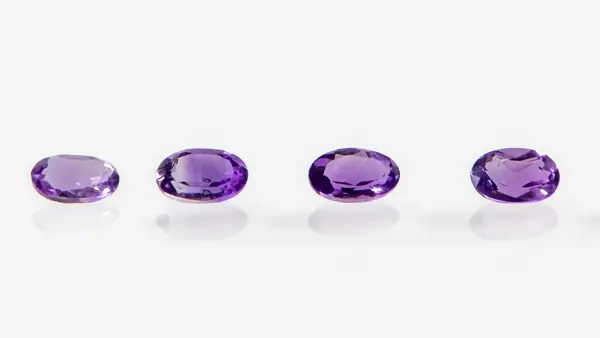
Photo: W.carter, CC BY 4.0 (credits). Illustrative.
Most rough stones from a gem mine can be turned into a finished gem in one of two ways: faceting, which cuts flat, polished faces into transparent stones to make them sparkle, or cabochon cutting, which shapes translucent or opaque stones into smooth domes. Only clean, transparent rough is worth faceting; included or opaque stones usually make better cabochons or tumbled pieces. Many gem mines offer cutting and setting, or you can use an independent lapidary or learn yourself at a club. This guide explains how to decide, what affects the result, and how to choose a cutter.
Faceting vs. cabochons
Faceting cuts a stone into a geometric pattern of flat faces that reflect light back to the eye. It suits transparent stones with good color and few inclusions: sapphire, ruby, garnet, aquamarine, emerald, topaz and clear quartz.
Cabochon cutting shapes a stone into a smooth, rounded top with a flat or slightly curved back. It suits translucent or opaque stones and those with interesting inclusions or patterns: agate, jasper, opal, turquoise, and star stones. The USGS gemstone archive notes that Idaho's star garnets show four- or six-ray stars when cut as cabochons, while transparent deep red garnets can be faceted.
Tumbling is the simplest option for smaller or lower-grade rough. See our rock tumbling guide.
Which finds are worth cutting?
Look at each stone with a 10x loupe (loupes) and consider:
- Transparency. Can you see through it? If yes, it may be facetable.
- Color. Is the color attractive and even? Pale stones may look lighter once cut.
- Clarity. Cracks and heavy inclusions can make a stone break during cutting or look dull.
- Size and shape. Cutting removes material, so the finished gem is much smaller than the rough. GIA notes that Yogo sapphire rough from Montana is often flat and tabular, which gives a very low yield, so stones over one carat are rare.
- Hardness. Harder stones take a better polish and wear well in jewelry. Sapphire and ruby (corundum) are very hard; the NC Geological Survey gives emerald a hardness of 7.5 to 8; quartz is 7. Softer stones need protective settings.
If you are not sure what a stone is, have it identified first. See how to identify common finds.
Options for getting stones cut
Cutting at the mine
Many pay-to-dig mines offer identification, cutting and setting, especially in North Carolina and Montana sapphire country. Advantages: convenience and staff who know local material. Ask:
- What the price includes (cutting only, or cutting and setting)
- How long it takes and whether they will ship it
- Whether the stone will be heat-treated
- Whether you will get back your own stone
Herkimer Diamond Mines, for example, has an artisan center where visitors can make jewelry with their finds, and the USGS notes that Herkimer crystals are faceted, mounted raw as pendants and earrings, or bored as beads.
Independent cutters
An independent lapidary or gem cutter may offer more choice of cuts. Look for a cutter with photos of past work in the same type of stone, clear pricing and an explanation of expected yield.
Doing it yourself
Rock and gem clubs often have shared lapidary equipment, cabochon classes and faceting machines. Cabochon cutting is the usual starting point because the equipment is simpler. Faceting takes more precision and a dedicated machine.
Heat treatment
Some gems, especially sapphires, are commonly heat-treated to improve color or clarity. GIA notes that Yogo sapphires do not require heat treatment, which is part of their appeal. Ask whether treatment is offered or recommended for your stones, and keep a record so you can disclose it if you ever sell the stone.
What affects the cost
We do not list cutting prices, because they vary by cutter and change over time. Factors include:
- Stone type and hardness
- Size and complexity of the cut
- Whether the stone needs repair or recutting
- Setting, metal and labor if you want jewelry
Get a quote before you hand over stones.
Preparing stones before you send them
Clean your rough with water and a soft brush so the cutter can see it clearly, and let it dry. Wrap each stone separately and label it with what you think it is, where you found it and the date. Photograph each stone next to a ruler before handing it over, so you have a record of what you sent. If you are mailing stones, use a padded box and a trackable service, and keep a list of the contents.
It also helps to tell the cutter what you want: maximum size, best color, a particular shape, or a stone sized for a specific setting. A good cutter will explain the trade-offs, such as accepting a slightly smaller stone to remove a visible inclusion. If a stone has a crack running through it, the cutter may recommend a cabochon or a smaller faceted stone instead.
Setting your stone
Once cut, a gem can be set in a ring, pendant or earrings. Hard stones like sapphire suit rings that get daily wear. Softer or brittle stones are better in pendants and earrings, or in protective settings.
Cabochon basics for DIY
- Choose a slab with an attractive pattern, free of cracks.
- Mark the outline with a template.
- Trim close to the line with a trim saw.
- Grind the shape on coarse wheels, then the dome.
- Smooth and polish through progressively finer wheels and polish.
- Wear eye protection and keep stones wet to control dust.
Ask your local club about safety, especially wet cutting to avoid dust.
Where to dig stones worth cutting
- North Carolina rubies, sapphires, garnets and emeralds: see North Carolina gem mines.
- Montana sapphires: see Montana sapphire mining.
- Arkansas quartz and Herkimer diamonds: see Arkansas quartz crystal digging and Herkimer diamonds.
- Oregon sunstones and thundereggs: see thundereggs and Oregon rockhounding.
Browse the pay-to-dig list.
FAQ
Can I get the gems I find at a mine cut?
Yes. Many gem mines offer cutting and setting, and independent lapidaries and gem clubs can also cut stones. Ask about price, time and treatment first.
Should I facet or cabochon my stone?
Facet clean, transparent stones with good color. Cut translucent, opaque, included or star stones as cabochons.
Why is my cut stone so much smaller than the rough?
Cutting removes material to create shape and remove flaws. Flat or irregular rough, such as many Yogo sapphires, gives a low yield.
Are mine finds valuable after cutting?
Some can be, but most are worth more as keepsakes than in money. Have stones identified and appraised by a qualified gemologist if you think one is valuable.
Sources
- Garnet – USGS Gemstones
- Quartz – USGS Gemstones
- Gemological Characterization of Sapphires from Yogo Gulch, Montana – GIA Gems & Gemology (2018)
- Emeralds – North Carolina Geological Survey
- Mine – Herkimer Diamond Mines (official site)
Sources checked 2026-11-04. Rules, hours and fees change; confirm with the operator or land manager before you go.