Arkansas Quartz Crystal Digging: Where to Go and How It Works
Updated 2026-11-04 · 1035 words
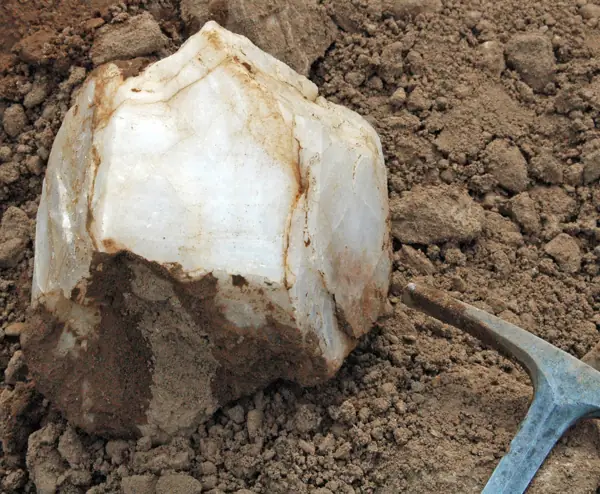
Photo: James St. John, CC BY 2.0 (credits). Illustrative.
Arkansas is the best-known place in the United States to dig your own quartz crystals. The crystals come from a quartz belt in the Ouachita Mountains of west-central Arkansas, around Mount Ida, Jessieville and Hot Springs, and several commercial mines let visitors dig and keep what they find for a fee. Quartz is the official Arkansas state mineral. This guide explains the geology, the public mines in our directory, what to bring, and how to clean your crystals, based on the Arkansas Geological Survey, the U.S. Geological Survey and the mines' own websites.
The Arkansas quartz belt
The Arkansas Geological Survey's educational material describes a quartz belt in the Ouachita Mountains about 30 to 40 miles wide and roughly 170 miles long. The survey explains that most crystal deposits mined there formed as veins filling cavities or fractures in the Crystal Mountain and Blakely sandstones, both Ordovician in age. It reports individual crystals up to 5 feet long and over 500 pounds, and clusters up to 15 feet long by 10 feet wide weighing over 10 tons. According to the survey, Act 128 of 1967 designated quartz as the state mineral.
The USGS gemstone archive says that to many in the gemstone industry, Arkansas and rock crystal quartz are synonymous, and that Mount Ida, Fisher Mountain, Hot Springs and Jessieville are places in the quartz belt. It describes the crystals as coming from quartz veins in sandstones and shales of the central Ouachita Mountains, and calls Arkansas the major U.S. producer of gemstone and decorative rock crystal.
Mines in our directory
Wegner Crystal Mines (Mount Ida)
Wegner Quartz Crystal Mines offers several activities. As of our November 2026 check, its official Crystal Forest Mine page said:
- The Crystal Forest Mine is a 40-acre open-pit surface mine known for clear crystals suitable for jewelry, as well as clusters, garden rocks and larger points.
- Collecting can be as easy as picking up crystals exposed on the surface, especially after rain, or you can work the quartz veins.
- Trucks to the mine leave Tuesday to Saturday at 9:30 a.m., 11:30 a.m. and 1:30 p.m.; arrive 15 to 20 minutes early. Reservations are not needed, and trips require at least two people.
- The trip is about 2.5 to 3 hours round trip. The listed price was $19.00 per person for two hours of on-site collecting, with transportation included.
- Tools and buckets are available for purchase, or you can bring your own. You keep all you find.
Prices and schedules change, so confirm on the official site before you go.
Ron Coleman Mining (Jessieville)
Ron Coleman Mining near Jessieville runs public crystal digging and publishes a "Fresh Dirt Log" that tells visitors when newly mined material has been placed in the digging area. Check its official pages for current hours, fees and activities, which we do not repeat because they change.
What to bring
Quartz digging is dirty, physical work. Useful gear:
- Gloves. Broken quartz edges are sharp.
- Eye protection if you will use a hammer or chisel on rock.
- A small garden trowel, a screwdriver or a "scratcher" for working crystals out of clay.
- A rock hammer and chisel for veins, where allowed. See rock hammers and chisels.
- Buckets and newspaper or bubble wrap. Crystals chip easily against each other. See buckets and screens.
- Water, sun protection and clothes you do not mind ruining. Arkansas clay stains.
How to find good crystals
- Look after rain. Wegner's site notes that crystals exposed on the surface are easiest to spot after a good rain.
- Work the clay pockets. Crystals form in openings in quartz veins; when you find one point, look nearby for more.
- Dig gently. Points and clusters break easily. Loosen the clay around a crystal instead of prying it out.
- Check terminations. A crystal with a sharp, undamaged point is more desirable than a broken one.
Cleaning Arkansas quartz
Most crystals come out coated with clay and iron oxide stains. Start by soaking and rinsing with water and a soft brush. Many collectors remove iron stains with oxalic acid, which some mine shops sell. Oxalic acid is toxic, so follow the product label carefully, wear gloves and eye protection, work outdoors, and keep it away from children and pets. Never mix cleaning chemicals.
Identifying quartz
Quartz has a hardness of 7, a glassy luster and, when it grows freely, six-sided crystals with pointed terminations. It does not split along flat planes the way calcite or feldspar do. See our guide to identifying common finds.
Combine your trip with Crater of Diamonds
Crater of Diamonds State Park near Murfreesboro is about a two-hour drive from the Mount Ida area. Arkansas State Parks describes it as the only place in the world where the public can search for diamonds in their original volcanic source, on a 37-acre plowed field, with a finders-keepers policy. The park also lists amethyst, garnet, jasper, agate and quartz among the stones found there. It prohibits ladders and battery-operated or motorized mining tools. See our beginner's guide to gem mining for tips.
Collecting on public land in Arkansas
The Arkansas Geological Survey notes that the U.S. Forest Service has a free quartz crystal collecting site named Crystal Vista in the Ouachita National Forest, south of Mount Ida in Montgomery County. Elsewhere in the forest, do not assume digging is allowed: rules depend on the area, and some ground is under mining claims. Contact the Ouachita National Forest for current Crystal Vista rules before you go, and read our rockhounding laws guide.
Quartz in history
The Arkansas Geological Survey notes that clear, colorless, untwinned quartz crystals had important uses as oscillators in radio equipment and in periscopes, gun sights and other optical equipment, particularly during World War II, and that quartz has more recently been mined for electronics and fiber optics. The survey also calls digging for crystals in mines a popular recreational activity. The USGS adds that Arkansas is the only producer of "lascas," the feed material used to make synthetic quartz.
See all Arkansas listings or the national pay-to-dig list.
FAQ
Where can I dig for quartz crystals in Arkansas?
Commercial mines around Mount Ida and Jessieville, such as Wegner Crystal Mines and Ron Coleman Mining, let visitors dig for a fee and keep their finds.
Is there free quartz crystal collecting in Arkansas?
The Arkansas Geological Survey says the U.S. Forest Service has a free collecting site named Crystal Vista in the Ouachita National Forest south of Mount Ida. Check current rules with the forest before you go.
Is quartz the Arkansas state mineral?
Yes. The Arkansas Geological Survey says Act 128 of 1967 designated quartz as the state mineral.
How do you clean Arkansas quartz crystals?
Rinse off clay with water and a soft brush. Many collectors remove iron stains with oxalic acid, which is toxic, so follow the label and use gloves and eye protection.
Can you keep what you find at Wegner Crystal Mines?
Yes. Wegner's Crystal Forest Mine page says you keep all you find.
Sources
- Quartz (Industrial) – Arkansas Geological Survey
- Arkansas Quartz Crystals (PDF) – Arkansas Geological Survey
- Quartz – USGS Gemstones
- Crystal Forest Mine – Wegner Crystal Mines
- Public Crystal Digging – Ron Coleman Mining
- Crater of Diamonds State Park – Arkansas State Parks
Sources checked 2026-11-04. Rules, hours and fees change; confirm with the operator or land manager before you go.