Geode Hunting: Where to Find Geodes and How to Open Them
Updated 2026-11-04 · 1012 words
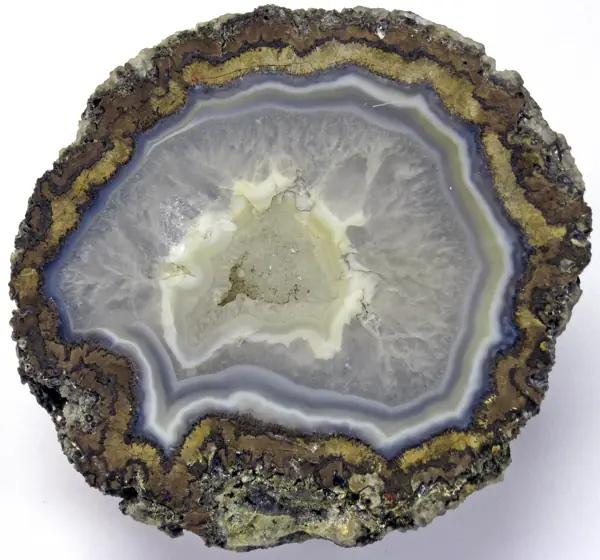
Photo: James St. John, CC BY 2.0 (credits). Illustrative.
Geodes are round rocks with a hollow center lined with crystals, usually quartz. In the United States, some of the best places to hunt them are on BLM land, such as the Dugway Geode Beds in Utah and the geode beds of the Wiley Well District in southern California, where collecting reasonable amounts for personal use is generally allowed. To spot one, look for a rounded, lumpy rock that feels light for its size. Not every geode site allows collecting: Iowa's Geode State Park is named after the state rock, but the Iowa DNR prohibits removing geodes from the park.
What is a geode?
A geode is a rock with an internal cavity lined with crystals or bands of mineral. Most form when a hollow in volcanic or sedimentary rock slowly fills with mineral-rich water, which deposits layers of chalcedony and then crystals growing inward. The outside is usually plain and rough; the inside is the surprise.
BLM says the most common mineral in Dugway geodes is quartz in various colors: clear (rock crystal), purple (amethyst) and pink (rose). Other geodes may contain calcite or other minerals. Thundereggs are related but are usually filled solid with agate or jasper; see our thundereggs guide.
Where to find geodes
Dugway Geode Beds, Utah (BLM)
Dugway Geode Beds in western Utah are described by BLM as a rockhounding hotspot. BLM's page notes:
- Geodes are usually found below the ground surface, by digging in the mostly soft, gray, unconsolidated material of the area.
- The best place to look is in areas that have already been excavated.
- Geodes are typically dark gray, hard, spherical and 2 to 4 inches across.
- Some are in harder material; look for rounded shapes, and you may need a pick and hammer to separate them.
- The soft material can collapse at any time. Tunneling is unsafe and not permitted.
BLM's directions start from Salt Lake City via I-80 and State Highway 36, then the old Pony Express Road and an unimproved road to the beds. It is remote; carry water, fuel and a spare tire.
Wiley Well District, California (BLM)
The Wiley Well District Geode Beds are in the desert between the Little Chuckawalla, Mule and Palo Verde mountains, managed by BLM's El Centro Field Office. BLM notes that winter rains bring flowers, making January and February a good time to visit, and that the area contains fossils and artifacts as well. Our directory also lists the North Black Hills Geode Beds in the same region. Artifacts are protected by federal law, so leave them in place.
Iowa: look, don't take
Geode State Park in southeast Iowa is named after the state rock. The Iowa DNR says removing geodes from the park is prohibited, so enjoy it for its scenery and history rather than collecting.
See all Utah, California and Iowa listings, and the national rockhounding list.
Rules for public land
BLM allows collecting reasonable amounts of rocks and minerals, including geodes, for personal, noncommercial use in most areas, with hand tools and minor disturbance. Collecting is not allowed on mining claims, developed recreation sites or private mineral estate. National parks prohibit collecting. Read our rockhounding laws guide before you go.
How to recognize a geode
- Shape: round or oval, often lumpy like a cauliflower.
- Weight: a hollow geode feels lighter than a solid rock of the same size.
- Sound: some hollow geodes sound different when tapped, or rattle if they contain loose crystals.
- Surface: rough, often with a different texture from the surrounding rock.
How to open a geode
BLM's Dugway page lists several methods:
- Breaking and smashing: put the geode in a cloth sack and strike it on a hard surface. This may break it into many small pieces.
- Hammer and chisel or center punch: this opens the geode with a rough or uneven edge. Tap around the middle to score a line, then strike harder.
- Sawing: a rock saw, or most tools with a carbide-tipped blade, will cut a geode. This works well if you want to polish the faces.
- Pipe cutter: a soil pipe cutter uses a chain with blades to crack the geode evenly, like cutting a pipe. BLM notes these can sometimes be rented from home improvement stores.
Always wear safety glasses and gloves. See chisels, hammers and safety gear.
What to bring
- A pick, shovel and rock hammer
- Safety glasses and gloves
- Buckets and a backpack
- Plenty of water, sun protection and navigation
- A vehicle suited to unpaved roads
See the full trip checklist.
Digging safely
BLM warns that the soft material at Dugway can collapse at any time and that tunneling is unsafe and not permitted. Dig shallow, open pits, keep children away from pit walls, and never dig under an overhang. Fill in pits when you are done where practical. In desert areas, avoid the hottest months and watch for flash floods in washes.
Telling geodes from concretions
Not every round rock is a geode. Concretions, which are solid lumps of cemented sediment, are common in many of the same areas and can look similar on the outside. They are usually heavier for their size and solid all the way through. If several rounded rocks from the same spot feel heavy and never rattle, you may be in a concretion bed rather than a geode bed. Previously dug pits are a good clue that others have found geodes there.
Pay-to-crack geodes
If you cannot travel to a geode bed, many gem mines and rock shops sell whole geodes to crack on site. Wegner Crystal Mines in Arkansas, for example, lists a geode cracker activity. Check the pay-to-dig list.
Displaying and cleaning geodes
Rinse geodes with water and a soft brush to remove dirt. Cut geodes can be polished on the outer edges or faces with lapidary equipment. Pairs of halves make a good display. See our guide on cutting and polishing finds.
FAQ
Where can I find geodes in the US?
BLM geode beds such as Dugway in Utah and the Wiley Well District in California are popular. Collecting reasonable amounts for personal use is generally allowed on open BLM land.
How can you tell if a rock is a geode?
Geodes are usually round and lumpy and feel light for their size because they are hollow. Some rattle when shaken.
What is the best way to open a geode?
BLM suggests a cloth sack and a hard strike, a hammer and chisel, a rock saw or a soil pipe cutter. A saw or pipe cutter gives the cleanest break.
Can I collect geodes at Geode State Park in Iowa?
No. The Iowa DNR says removing geodes from the park is prohibited.
Sources
- Dugway Geode Beds – Bureau of Land Management
- Wiley Well District Geode Beds – Bureau of Land Management
- Geode State Park – Iowa DNR
- Rockhounding on Public Lands – Bureau of Land Management
- Can I Keep This? – Bureau of Land Management
- Wegner Crystal Mines – official site
Sources checked 2026-11-04. Rules, hours and fees change; confirm with the operator or land manager before you go.