Historic Mine Tours: Go Underground Safely
Updated 2026-11-04 · 1051 words
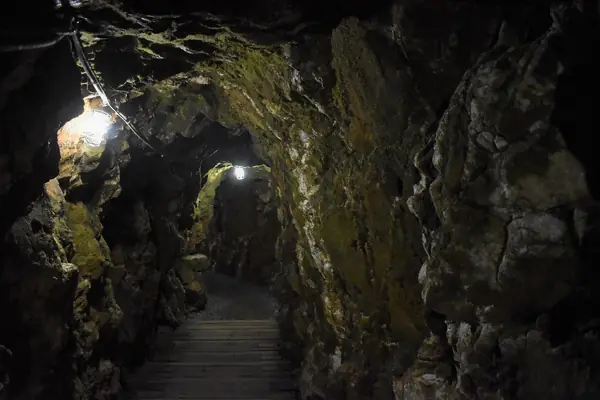
Photo: Gus Jewell, CC BY-SA 4.0 (credits). Illustrative.
A guided mine tour is the only safe way to go underground in an old mine. Historic mines across the country now run tours: the Quincy Mine in Michigan takes visitors more than 360 feet underground in a copper mine worked in the 1860s, the Lackawanna Coal Mine Tour in Pennsylvania descends 300 feet into an anthracite mine opened in 1860, and Portal 31 in Kentucky carries visitors into a historic coal mine on a rail car. Gold mines like Reed in North Carolina and Big Thunder in South Dakota add panning. Never enter an abandoned mine on your own: MSHA warns that abandoned mines contain hidden, often lethal hazards.
Tours in our directory
Quincy Mine, Hancock, Michigan (copper)
Quincy Mine Tours are run by the Quincy Mine Hoist Association. Its official site says the Quincy Mining Company was one of the largest copper producers in Michigan's Copper Country, operating underground from 1846 to 1945 and producing nearly one billion pounds of copper. The site is a Heritage Site of Keweenaw National Historical Park and a National Historic Landmark. Guided tours go more than 360 feet underground into areas worked in the 1860s, and self-guided landscape tours are free. The site also mentions winter tours.
Lackawanna Coal Mine Tour, Scranton area, Pennsylvania (anthracite)
The Lackawanna Coal Mine Tour is run by Lackawanna County. The county's page says visitors ride a portal bus down Slope #190 to 300 feet below the surface into an anthracite mine opened in 1860, and walk the gangways and rock tunnel to see three coal veins. As of our November 2026 check, the county listed the tour as open April 1 to November 30 on Thursdays through Mondays, with Tuesdays and Wednesdays reserved for groups, and closed Easter Sunday and Thanksgiving. The Pennsylvania Anthracite Heritage Museum is just up the hill.
Portal 31, Lynch, Kentucky (coal)
Portal 31 Mine Tour is a historic coal mine portal built by U.S. Coal and Coke, a subsidiary of U.S. Steel, in Harlan County. Its official site says visitors ride a rail car into the mine wearing traditional miner's gear, and that on February 12, 1923, miners there produced 12,820 tons of coal in a single nine-hour shift, a world record at the time. At its peak, Lynch had nearly 10,000 residents from 38 nations. The site listed hours of Tuesday to Saturday, 10 a.m. to 5 p.m., when we checked in November 2026.
Reed Gold Mine, Midland, North Carolina (gold)
Reed Gold Mine State Historic Site is the site of the first documented gold find in the United States, according to NC Historic Sites. Admission is free, with fees for guided mine tours and gold panning. Hours listed in November 2026 were Tuesday to Saturday, 9 a.m. to 5 p.m.
Big Thunder Gold Mine, Keystone, South Dakota (gold)
Big Thunder Gold Mine in the Black Hills offers guided tours of its historic gold mine, on-site panning and a claim panning adventure along Battle Creek, according to its official site. It notes walk-ins are welcome, but its online booking does not take same-day tours. Check its "Current Hours and Rates" page.
More tours
- Bachelor-Syracuse Mine Tour, Ouray, Colorado
- Queen Mine Tours, Bisbee, Arizona, which operates as the Copper Queen Mine Tour
- Sutter Gold Mine and Kennedy Gold Mine, California
See the full mine tours list. We list hours and fees only where operators publish them; for the rest, check the official site or call.
What to expect on a tour
- Cool temperatures. Underground mines stay cool year-round, so bring a jacket even in summer.
- Hard hats and gear. Many tours provide hard hats, and some provide miner's gear.
- Walking or riding. Tours may be on foot, by rail car or by bus. Ask about accessibility in advance if anyone in your group has mobility needs.
- Damp ground. Wear sturdy, closed-toe shoes.
- History. Guides explain mining methods, the lives of miners and their families, and why the mine mattered to the region.
Why you should never explore abandoned mines
MSHA's safety alert "Stay Out of Abandoned Mines" says abandoned and inactive mines exist in every state, with about 17,000 abandoned underground mines and 56,000 abandoned surface mines nationwide. It lists hidden, often lethal hazards:
- Vertical shafts
- Unstable ground and highwalls
- Bad air, from oxygen deficiency or toxic gases
- Flooded workings
- Old explosives
- Decaying timbers, loose rock and sudden subsidence
MSHA's best practices: do not enter any mine opening, shaft, or fenced or posted area, and treat every opening as deadly. Never swim or dive in quarries or pit lakes, where depth, entanglement and cold-water shock kill even strong swimmers. Do not try urban exploration, drones or rope descents into mines, because recreational gear does not protect against toxic air, collapses or hidden shafts. Report unsecured openings to the land manager, such as a BLM office, a state abandoned mine lands program or the property owner. Entering sealed or posted mine structures is trespassing.
Tour mines, by contrast, are maintained for visitors and run by trained guides.
Combine a tour with panning or digging
Many mine tours are near panning or gem sites. Reed and Big Thunder add gold panning; see how to pan for gold. For a full family day, pair a tour with a pay-to-dig mine; see gem mining with kids and the pay-to-dig list.
What to bring
- A jacket or sweater
- Sturdy closed-toe shoes
- A camera; ask if flash is allowed
- Water and snacks for afterward
- Cash or card for fees, panning and the gift shop
See our trip checklist.
Why mining history matters
Mines shaped many American towns. The Lackawanna County tour describes how northeastern Pennsylvania was built by coal miners and textile workers, many of them immigrants from Eastern and Southern Europe. Portal 31's company town of Lynch drew residents from 38 nations. A tour is a chance to hear those stories where they happened.
Booking tips
- Check the season. Many tours are seasonal; Lackawanna listed April 1 to November 30.
- Book ahead in summer for popular tours.
- Ask about age limits and accessibility.
- Allow time for museums and exhibits on site.
FAQ
Are mine tours safe?
Commercial and historic-site tours are run by trained guides in areas maintained for visitors. Never enter an abandoned mine; MSHA warns they contain vertical shafts, unstable ground and bad air.
How cold is it in a mine?
Underground mines stay cool year-round, so bring a jacket even in summer. Check the tour's site for specifics.
Which mine tours let you pan for gold?
Reed Gold Mine in North Carolina and Big Thunder Gold Mine in South Dakota both offer gold panning alongside tours, according to their official sites.
How deep do mine tours go?
It varies. The Quincy Mine tour goes more than 360 feet underground, and the Lackawanna Coal Mine Tour descends 300 feet.
Sources
- Quincy Mine – Quincy Mine Hoist Association
- Coal Mine Tour – Lackawanna County
- Portal 31 Mine Tour – official site
- Reed Gold Mine – NC Historic Sites
- Big Thunder Gold Mine – official site
- Copper Queen Mine Tour – official site
- Stay Out of Abandoned Mines safety alert – MSHA
Sources checked 2026-11-04. Rules, hours and fees change; confirm with the operator or land manager before you go.